


PPF vs. Ceramic Coating: Which Is Best for Your Vehicle in Clayton, NC?
If you've been researching ways to protect your vehicle's paint, you've probably come across two popular options: Paint Protection Film (PPF) and Ceramic Coating. Both promise to keep your car looking fresh and pristine, but they work in completely different ways.
So which one is actually right for you?
We get this question all the time at Elite Window Tintz. After more than 20 years of protecting vehicles throughout Clayton, Raleigh, and the surrounding Triangle area, we've helped thousands of car owners make this exact decision. The truth is, there's no one-size-fits-all answer. It really depends on your driving habits, your budget, and what you're trying to protect against.
Let's break it all down so you can make the best choice for your ride.
What Exactly Is Paint Protection Film (PPF)?
Paint Protection Film, often called PPF or "clear bra", is a thick, transparent urethane film that's applied directly to your vehicle's painted surfaces. Think of it as invisible armor for your car.
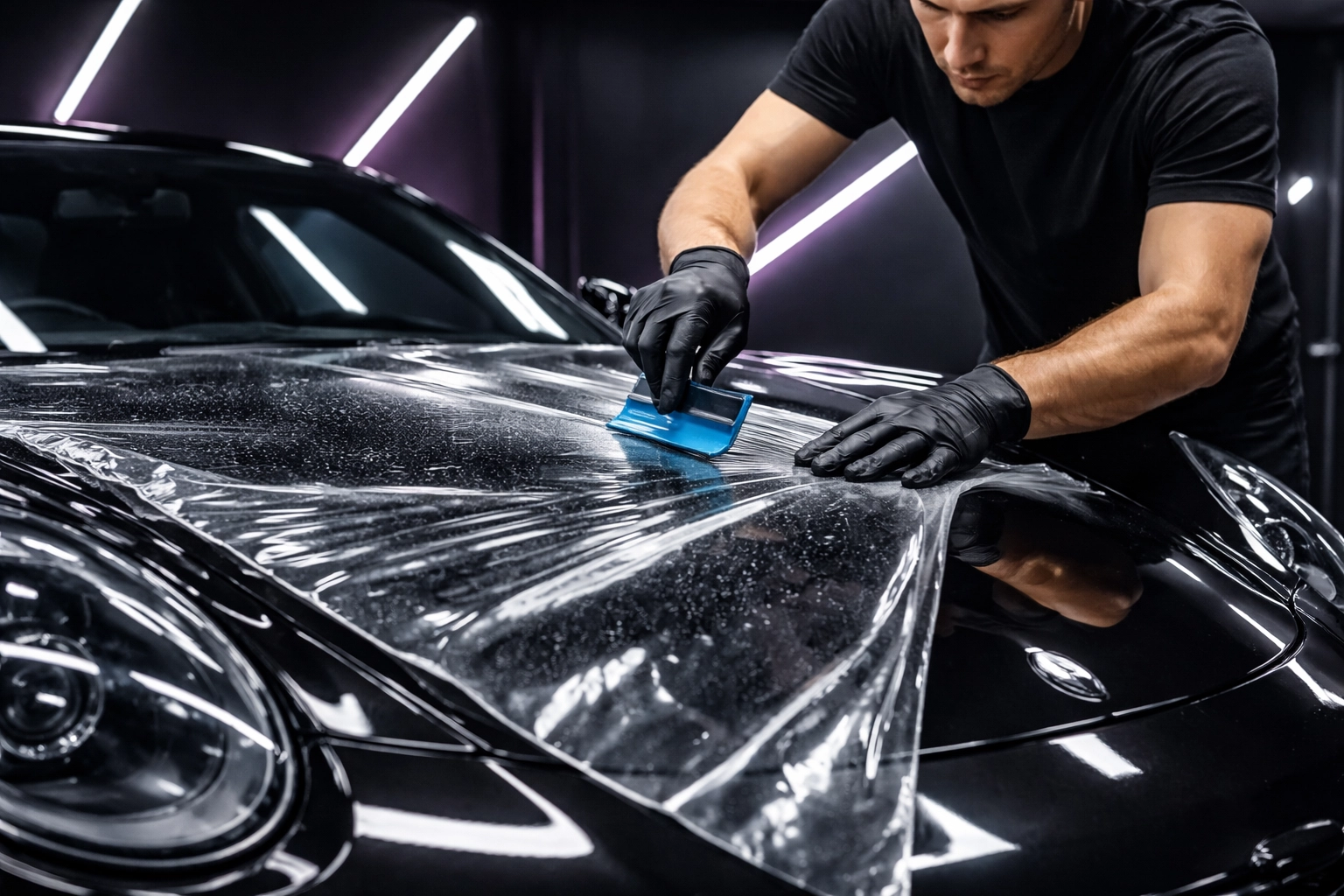
PPF is specifically designed to absorb physical impacts. We're talking rock chips, road debris, bug splatter, minor scratches, and even light scuffs from careless parking lot encounters. The film takes the hit so your paint doesn't have to.
One of the coolest features of modern PPF is its self-healing properties. Minor scratches and swirl marks in the film can actually disappear with heat exposure, whether from the sun or warm water. Pretty impressive technology, right?
PPF is typically applied to high-impact areas like the hood, front bumper, fenders, side mirrors, and door edges. However, many car owners opt for full-body coverage for maximum protection.
What Is Ceramic Coating?
Ceramic Coating is a liquid polymer that chemically bonds to your vehicle's factory paint, creating a semi-permanent protective layer. Unlike wax or sealants that sit on top of the paint and wash away over time, ceramic coating becomes part of your car's surface.
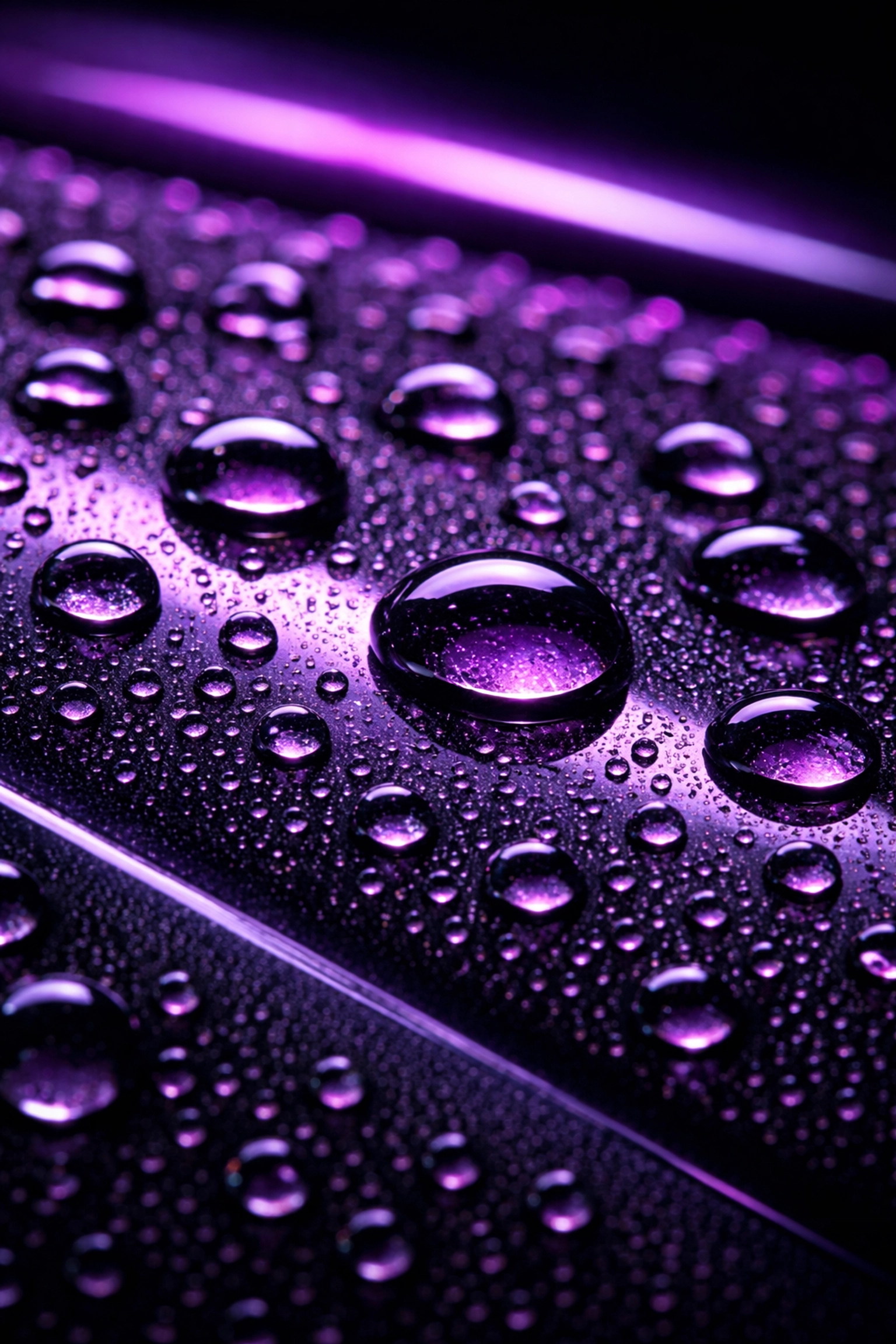
The result? A seriously hydrophobic finish that repels water, dirt, and contaminants like nobody's business. Water beads up and rolls right off, taking dirt and grime with it. This makes washing your car way easier and keeps it looking cleaner between washes.
Ceramic coating also provides excellent protection against UV rays, oxidation, bird droppings, tree sap, and chemical stains. Plus, it gives your paint an incredible glossy depth that makes your car look like it just rolled off the showroom floor.
PPF vs. Ceramic Coating: The Key Differences
Now let's get into the nitty-gritty. Here's how these two protection options stack up against each other.
Protection Level
This is where the biggest difference lies.
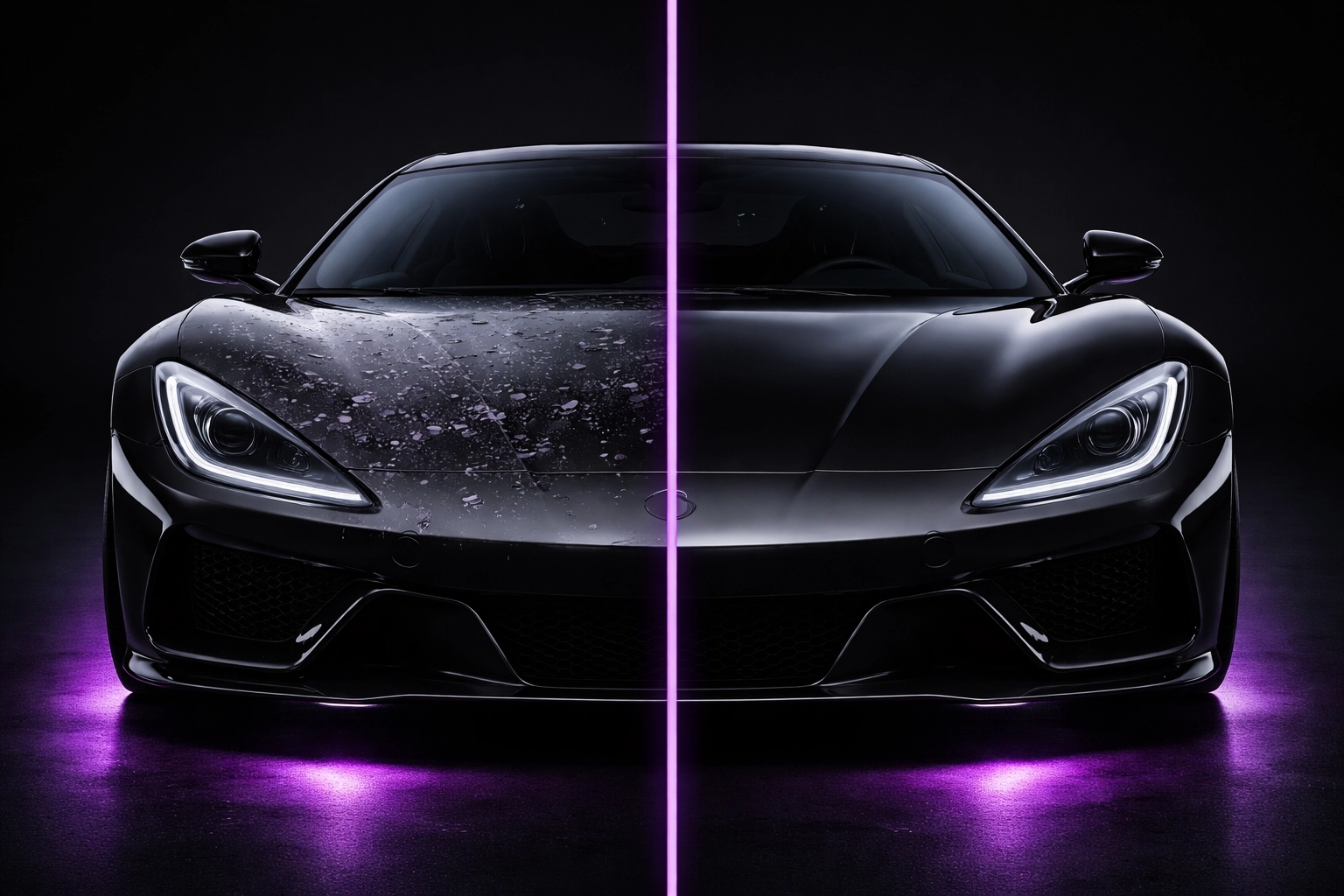
PPF is the clear winner when it comes to physical protection. If you're worried about rock chips on Highway 70, gravel roads around Johnston County, or shopping cart dings at the Clayton Crossings parking lot, PPF has your back. It's literally designed to absorb impacts and prevent damage to your paint.
Ceramic Coating excels at chemical and environmental protection. It guards against UV damage, acid rain, bird droppings, and oxidation. However, it won't stop a rock from chipping your paint. Think of ceramic coating as sunscreen for your car, it protects against environmental damage but won't stop physical impacts.
Durability and Longevity
PPF typically lasts 5-10 years with proper care, and some premium brands even offer lifetime warranties. The film maintains its protective properties throughout its lifespan, though it may eventually need replacement in high-impact areas.
Ceramic Coating generally lasts 2-5 years depending on the quality of the product and how well you maintain it. Professional-grade coatings tend to last longer than DIY options, but periodic reapplication is usually necessary to maintain optimal protection.
Cost Comparison
Let's talk money, because we know that matters.
PPF has a higher upfront cost. The material itself is more expensive, and professional installation requires significant skill and time. A full front-end PPF package can range from several hundred to over a thousand dollars, while full-body coverage is a more substantial investment.
Ceramic Coating is generally more affordable initially. Professional application costs less than PPF, making it accessible to more car owners. However, factor in potential reapplication costs over time.
We believe both options represent smart investments in your vehicle's long-term value, it just depends on what protection matters most to you.
Maintenance Requirements
Ceramic Coating makes maintenance a breeze. Its hydrophobic properties mean dirt and grime don't stick as easily, so washing your car takes less time and effort. Water spots are less of an issue, and that glossy finish stays looking sharp with minimal work.
PPF requires a bit more attention. While it's not high-maintenance by any means, you'll want to wash it regularly and avoid harsh chemicals. Some PPF products benefit from occasional application of a PPF-specific sealant.
Appearance and Aesthetics
Both options can look fantastic when professionally installed.
Ceramic Coating typically provides a more dramatic visual enhancement. It amplifies your paint's depth and gloss, giving your vehicle that wet, just-detailed look that turns heads.
PPF is designed to be virtually invisible. High-quality film installed by experienced technicians, like our team at Elite Window Tintz, blends seamlessly with your paint. You get protection without changing your car's appearance.
Which Option Is Right for You?
Here's our honest take based on different driver profiles in the Clayton and Raleigh area.
Choose PPF If You...
Drive frequently on highways like I-40, I-95, or US-70 where road debris is common
Own a luxury, exotic, or high-value vehicle
Lease your car and need to return it in pristine condition
Park in busy areas where door dings are a risk
Want the ultimate physical protection for your investment
Choose Ceramic Coating If You...
Primarily want easier maintenance and cleaning
Love that deep, glossy showroom shine
Want protection against UV damage and environmental contaminants
Have a tighter budget but still want quality protection
Don't encounter much road debris in your daily driving
Consider Both If You...
Want the ultimate protection package for your vehicle
Own a new or high-end car you plan to keep for years
Want physical AND chemical protection with easier maintenance
The Best of Both Worlds: Combining PPF and Ceramic Coating
Here's something we love recommending to our Clayton and Raleigh customers, you don't actually have to choose just one.
Combining PPF and ceramic coating gives you comprehensive protection that covers all the bases. We apply PPF first to protect against physical damage, then layer ceramic coating on top. This hybrid approach gives you:
Rock chip and scratch protection from the PPF
Enhanced hydrophobic properties from the ceramic coating
UV and chemical protection
Easier maintenance
That gorgeous glossy finish
Yes, it's a bigger investment upfront. But for car owners who want the absolute best protection available, this combo is hard to beat.
Why Clayton and Raleigh Drivers Trust Elite Window Tintz
We've been protecting vehicles in the Triangle area for over 20 years: and we've seen it all. From daily drivers battling I-440 traffic to weekend warriors with pristine sports cars, we understand what North Carolina roads can do to your paint.
Our team uses only premium materials and stays current with the latest application techniques. Whether you're looking for ceramic coating in Smithfield, Garner, or Knightdale, we've got you covered.
We also offer comprehensive car detailing services in Clayton to prep your vehicle before any protection application: because proper preparation is key to lasting results.
Ready to Protect Your Investment?
Still not sure which option is best for your specific situation? We get it: this is an important decision.
Stop by Elite Window Tintz or book an appointment online for a consultation. We'll assess your vehicle, discuss your driving habits, and recommend the protection package that makes the most sense for you.
Your car deserves the best protection available. Let's make it happen.
Great breakdown of PPF vs ceramic coating—easy to understand and very helpful for car owners trying to choose the right protection. I like how you explained that PPF protects against physical damage while ceramic coating enhances shine and repels contaminants . Also, for anyone looking for expert detailing, check out Car Detailing Conway NH.