


Solar Gard vs. Avery Dennison Window Film: Which Is Better for Your Car in Clayton and Raleigh?
Updated: Sep 1
Choosing the right automotive window film is about more than picking a recognizable brand. The best tint for your vehicle should match your driving habits, desired appearance, heat-reduction goals, privacy preferences, budget, and the amount of time you spend behind the wheel.
For drivers comparing Solar Gard vs. Avery Dennison window film, both manufacturers offer respected automotive tint options across multiple performance levels. The better choice ultimately depends on the specific film series, visible light transmission (VLT), heat rejection, UV protection, construction, warranty, and quality of the installation.
For drivers searching for window tinting in Clayton, NC, window tint in Raleigh, NC, or higher-performance ceramic window film throughout the Triangle, understanding these differences can make it much easier to choose the right product. At Elite Window Tintz, we install quality Solar Gard and Avery Dennison films and help customers compare options based on their vehicle and priorities instead of simply recommending the most expensive film available.
Solar Gard vs. Avery Dennison: The Short Answer
Neither Solar Gard nor Avery Dennison is automatically the best window film for every vehicle. Both manufacturers offer multiple automotive tint products, and performance can vary considerably between dyed, carbon, ceramic, infrared-focused, and other premium films.
That means the most useful comparison is not simply Solar Gard vs. Avery Dennison. Instead, drivers should compare equivalent films from each manufacturer at similar VLT levels.
For example, a premium Solar Gard ceramic film may be the right fit for a Raleigh commuter focused heavily on heat control and cabin comfort, while an Avery Dennison option may better match another driver’s preferred appearance, privacy level, performance expectations, and budget.
The vehicle itself also matters. A daily commuter, luxury sedan, family SUV, work truck, and weekend sports car may each benefit from a different tint configuration. Factory privacy glass, windshield size, interior color, parking habits, and the amount of time spent driving through the Raleigh-Clayton area can all influence the final recommendation.
What Do Solar Gard and Avery Dennison Have in Common?
Solar Gard and Avery Dennison are established manufacturers offering automotive films designed to improve comfort, reduce glare, filter ultraviolet radiation, increase privacy, and enhance a vehicle’s appearance.
Both manufacturers also provide multiple product families instead of one universal tint. This gives drivers the ability to select a film based on the level of performance and appearance they actually want.
Solar Gard’s automotive warranty information includes several product families, including Endeavor, Galaxie, HP Charcoal, HP Quantum, HP Smoke Plus, HP Supreme, VortexIR Ceramic, and XenithIR Ceramic. Warranty coverage varies between specific products, with many offering limited-lifetime protection and others carrying different terms.
Avery Dennison likewise publishes automotive warranty terms covering qualifying professionally installed Automotive Solar Control Films and Safety Films against specified issues such as bubbling, peeling, cracking, delamination, demetallization, and fading to purple, subject to applicable conditions and registration requirements.
That is an important distinction when comparing automotive window tint. A manufacturer name alone does not tell you exactly what warranty you are receiving. The specific film series, installation, ownership requirements, documentation, and warranty terms all matter.
For drivers investing in professional window tinting in Clayton, NC or window tinting in Raleigh, NC, asking which exact film is being installed is one of the best ways to make an informed comparison.
Comparing Dyed, Carbon, Ceramic, and Premium Film
The most useful comparison begins with film construction. Solar Gard and Avery Dennison may offer different product families, but drivers generally choose among these performance categories:
Dyed Window Film
Dyed film is often the most budget-conscious option. It can create a darker, cleaner appearance while reducing visible light and glare. It is a practical choice for drivers who want improved privacy and a noticeable style upgrade without selecting the highest-performance film available.
The exact heat rejection and durability depend on the specific film and installation. We recommend comparing the manufacturer’s data rather than assuming every dyed film performs the same way.
Carbon Window Film
Carbon film is popular with drivers who want a sleek charcoal appearance, dependable privacy, and a balance between cost and performance. Non-metallic carbon construction can also be a good consideration for vehicles with modern electronics, toll transponders, GPS, Bluetooth, and other connected technology.
Carbon films can be an excellent middle-ground solution: combining visual impact with practical comfort. However, the final result still depends on the product line, VLT, glass type, and installation quality.

Ceramic Window Film
Ceramic film is generally selected by drivers who want advanced heat rejection, glare control, optical clarity, and UV protection. Because ceramic films are non-metallic, they are commonly considered for vehicles where signal clarity is important.
A quality ceramic film can deliver premium comfort without requiring an extremely dark appearance. That makes Ceramic Window Tint Clayton NC a strong option for drivers who want to safeguard the interior, reduce cabin heat, and maintain a refined look.
We do not recommend relying on a generic claim such as “ceramic is always better.” Performance should be confirmed using the technical data for the exact product and VLT you are considering.
Premium and Specialty Film
Premium film may include advanced ceramic, infrared-focused, safety, or specialty constructions. These products can be appropriate for luxury vehicles, daily commuters, family SUVs, work trucks, and drivers who spend long hours on I-40, U.S. 70, or the Raleigh Beltline.
The ultimate choice is not necessarily the darkest film or the most expensive film. It is the product that delivers the right combination of comfort, appearance, clarity, protection, and long-term value for your vehicle.
The Performance Factors That Matter Most
When we compare Solar Gard and Avery Dennison for a customer, we focus on measurable and practical details:
Visible light transmission: VLT describes how much visible light passes through the film. A lower VLT generally creates a darker appearance, but the selected shade must also be appropriate for the vehicle and North Carolina requirements.
Heat rejection: Compare the manufacturer’s published solar performance data for films with similar VLT. Darker does not automatically mean cooler.
UV protection: Quality automotive films can help filter UV radiation, supporting interior preservation and passenger comfort. Confirm the stated protection for the exact product.
Appearance: Some drivers prefer a neutral black look, while others want a charcoal tone or a nearly clear appearance with solar performance.
Signal compatibility: Non-metallic carbon and ceramic options are often considered when uninterrupted radio, GPS, cellular, and toll-tag performance is important.
Warranty: Review the exact coverage period, eligible defects, ownership limitations, registration requirements, and installer conditions.
Installation: Even the latest innovation will not perform as intended if the glass is poorly prepared or the film is cut and installed carelessly.
Why Professional Installation Changes the Result
We believe professional installation is part of the product: not an optional extra. Proper tinting requires careful glass preparation, accurate pattern cutting, controlled application, clean edges, and attention to the vehicle’s seals, defroster lines, sensors, and interior surfaces.
A professional installation also helps you avoid common problems such as contamination, excessive fingers, uneven edges, peeling, premature bubbling, and poor visibility. We use experienced technicians and quality materials to deliver a clean finish that combines protection and style: without compromising the vehicle’s appearance.

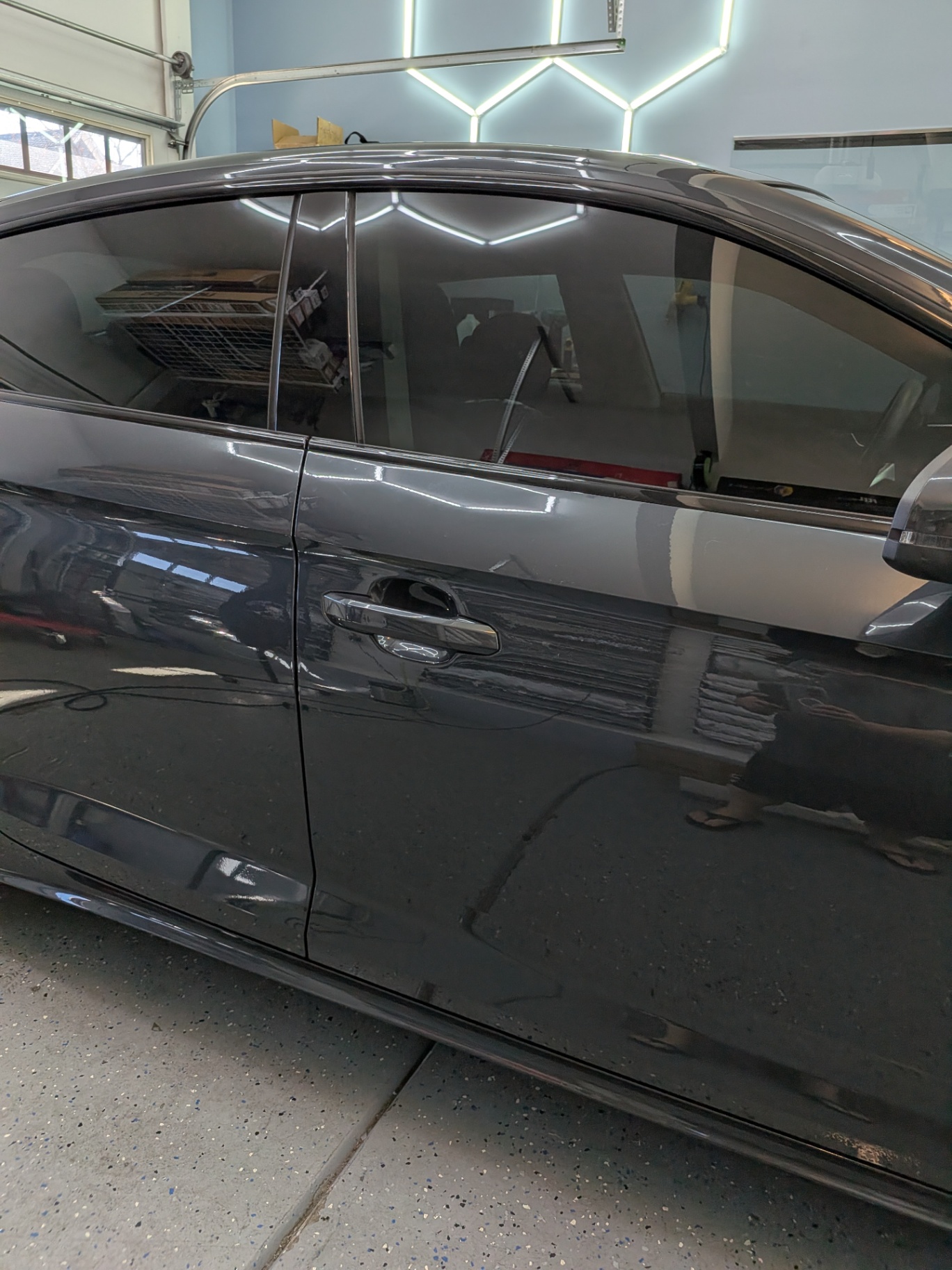
This before-and-after example shows why film selection and installation work together. The right tint can transform the visual character of your vehicle while helping make daily driving more comfortable.
Which Film Is Best for Your Car?
Solar Gard may be the right choice if a specific Solar Gard product meets your desired VLT, thermal performance, appearance, warranty expectations, and budget. Avery Dennison may be the better choice when its available film provides the combination of clarity, style, durability, and solar control you want.
We like to match the film to the vehicle rather than make blanket recommendations. A family SUV used for school runs may benefit from a different balance of privacy and heat rejection than a commuter sedan, convertible, classic car, or work truck. Your existing factory glass also affects the final shade and appearance.
Before choosing, ask for the exact product name, VLT, performance information, warranty details, expected appearance, installation timeline, and aftercare instructions. A trustworthy installer should be comfortable explaining those details.
Choose Elite Window Tintz for Window Tinting in Clayton and Raleigh
Elite Window Tintz has more than 20 years of experience helping drivers in Clayton, Raleigh, and surrounding communities upgrade and protect their vehicles. We offer quality Solar Gard and Avery Dennison options, professional installation, competitive pricing, and a 100% satisfaction guarantee.
Whether you are comparing Solar Gard vs. Avery Dennison, considering a carbon upgrade, or searching for premium window tint raleigh nc, we will help you evaluate the options based on your actual vehicle and priorities.
Visit our Window Tinting Clayton NC service page or learn more about window tinting in Raleigh. Then book a consultation and request a vehicle-specific recommendation. We will help you choose the right film to make your drive cooler, more comfortable, and more protected: an upgrade built to last.
Frequently Asked Questions
Is Solar Gard better than Avery Dennison?
Not automatically. Both brands offer different product categories and performance levels. The better choice depends on the exact film, VLT, heat rejection, UV protection, appearance, warranty, vehicle, and installation.
Does darker window tint reject more heat?
Not necessarily. Darkness and heat rejection are related to different film characteristics. Compare the manufacturer’s technical specifications for the exact products rather than selecting film based only on shade.
Will ceramic tint interfere with GPS or radio signals?
Ceramic film is non-metallic and is commonly selected when signal clarity is important. We can discuss the best option for your vehicle’s electronics and glass configuration.
How long does automotive window tint last?
Longevity depends on the film, installation, exposure, care, and warranty terms. Professional installation and proper maintenance help protect your investment.
Where can I verify the warranty information?
Review Solar Gard’s official automotive warranty listings and Avery Dennison’s published automotive warranty terms. We can also explain the applicable warranty for the film selected for your vehicle.
Comments